
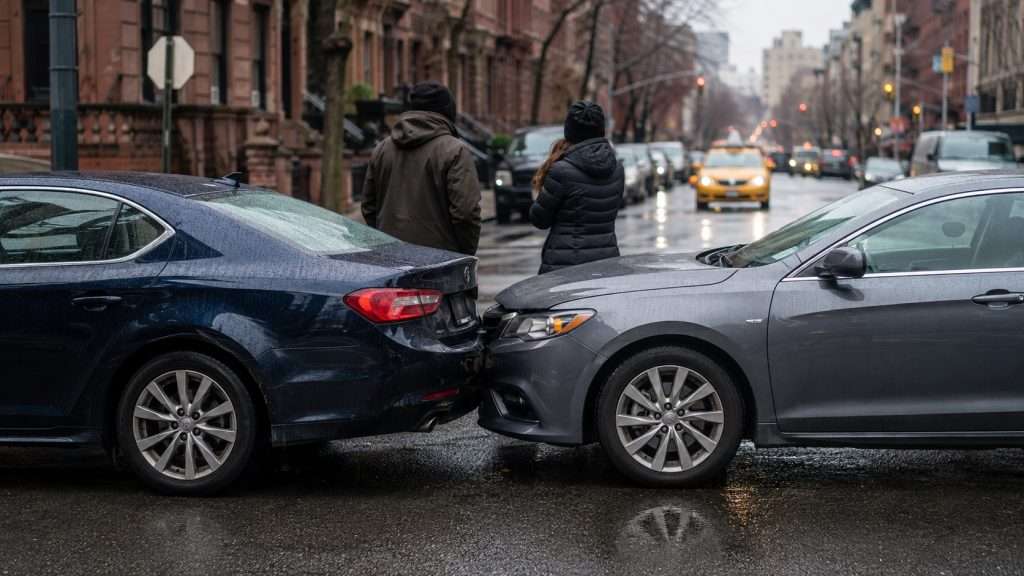
How does no-fault insurance work after a New York car accident? In short: your own auto insurer pays your basic medical bills and a portion of lost wages up to $50,000, regardless of who caused the crash, and in exchange your right to sue is limited unless your injury meets a specific legal threshold. That trade-off confuses a lot of people right after an accident, especially when bills start arriving before any fault determination has been made.
Why New York Uses a No-Fault System in the First Place
No-fault insurance was designed to get small and mid-size accident claims out of the court system entirely. Instead of waiting months or years for a judge to decide who caused a crash, each driver’s own insurer pays out on basic medical and wage losses right away, regardless of fault. The idea was to lower the cost of auto insurance overall and get injured people paid faster, while reserving lawsuits for cases involving a genuinely serious injury.
What No-Fault Insurance Actually Covers
New York’s no-fault system, created under Insurance Law Article 51, requires every auto policy to include Personal Injury Protection, generally called PIP or basic no-fault coverage. It pays medical and related expenses, lost earnings up to $2,000 per month for up to three years, and other reasonable expenses up to $25 a day, all combined into a single $50,000 basic economic loss limit per person.
It does not cover pain and suffering, and it does not pay to repair your car. No-fault is strictly about getting medical bills and some lost income paid quickly, without waiting for a fault investigation or a lawsuit.
Coverage applies broadly. Drivers, passengers, and pedestrians struck by a car can all be covered persons under the statute, which is part of why the filing rules differ depending on whether you were behind the wheel, riding along, or walking at the time of the crash.
How Do You Actually File a No-Fault Claim?
The filing window is shorter than most people expect. Under DFS Regulation 68, written notice of the claim generally must reach the insurer within 30 days of the accident, not 90, unless there’s a documented reason for the delay. Occupants of a car file with that car’s insurer. A pedestrian struck by a vehicle files with the insurer of the vehicle that hit them.
If the driver who hit you was uninsured, or you can’t identify the vehicle, coverage typically shifts to a household relative’s policy or, as a last resort, the Motor Vehicle Accident Indemnification Corporation, a fallback fund that exists for exactly this situation.
What Happens When Medical Bills Exceed $50,000?
Serious injuries often blow past the basic no-fault cap quickly. At that point, a few things can happen: an optional Additional PIP policy (if one was purchased) can pick up more of the cost, your own health insurance can step in, and if the injury meets New York’s serious injury threshold, you can bring a lawsuit against the at-fault driver for the amount no-fault didn’t cover, plus pain and suffering. That threshold question is significant enough that we’ve covered it in a separate article on how medical documentation affects a serious injury claim.
When Can You Sue Instead of Relying on No-Fault Alone?
You can pursue a case against the other driver only if your injury meets one of the categories under Insurance Law 5102(d): death, dismemberment, significant disfigurement, a fracture, loss of a fetus, or a permanent or significant limitation of a body function. New York narrowed this list in 2026, so it’s worth confirming with an attorney exactly where a given injury falls before assuming a lawsuit is or isn’t an option.
What If the No-Fault Insurer Denies or Delays Your Claim?
Denials and delayed payments are common enough that DFS tracks them. Insurers are required to pay or deny a claim within a set timeframe after receiving proper proof, and unresolved disputes over unpaid awards can be escalated directly to the Department of Financial Services for enforcement, or resolved through the No-Fault arbitration process most policies require. Keeping copies of every bill, denial letter, and piece of correspondence makes that process considerably easier if a dispute drags on.
This article is for general informational purposes only and does not constitute legal advice. Speaking with an attorney can help you understand how New York law may apply to your specific situation.
Contact Held & Hines LLP
If you were injured in a car accident, rideshare accident, or another motor vehicle incident in New York and have questions about your no-fault claim, Held & Hines LLP can review the facts and help you understand your options. Contact us for a consultation.
FAQ Section
Q: How long do I have to file a no-fault claim after a car accident in New York?
A: Generally 30 days from the date of the accident under DFS Regulation 68, though insurers may accept a late notice if there’s a documented, reasonable justification for the delay.
Q: Does no-fault insurance cover pain and suffering in New York?
A: No. No-fault only covers basic economic loss, medical bills and a portion of lost wages. Pain and suffering can only be pursued through a lawsuit if the injury meets New York’s serious injury threshold.
Q: What happens if my medical bills go over the $50,000 no-fault limit?
A: Additional PIP coverage (if purchased), your own health insurance, or a lawsuit against the at-fault driver can cover costs beyond the basic $50,000, depending on the circumstances and whether the injury meets the serious injury threshold.
Q: Can a pedestrian file a no-fault claim in New York?
A: Yes. A pedestrian injured by a vehicle generally files a no-fault claim with the insurer of the vehicle that struck them.
Q: Do I need to prove the other driver was at fault to get no-fault benefits?
A: No. No-fault benefits are paid by your own insurer regardless of who caused the accident. Fault only becomes relevant if you pursue a separate lawsuit for damages beyond no-fault.
This article is for general informational purposes only and does not constitute legal advice. Speaking with an attorney can help you understand how New York law may apply to your specific situation.