
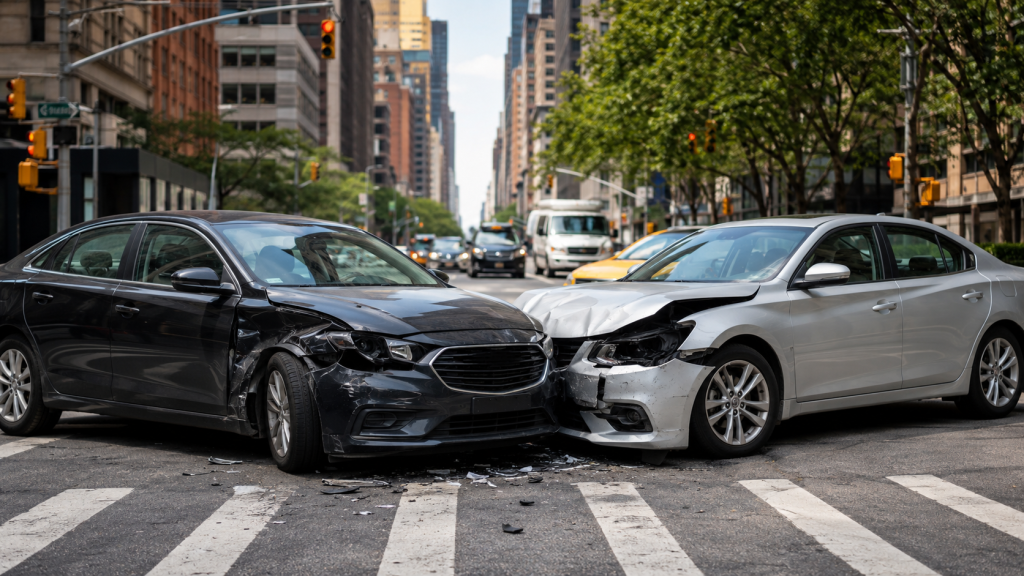
The Reality of Summer Rideshare Travel in New York
Summer completely alters the flow of traffic across New York. From packed vehicles heading out to the Rockaways or the Hamptons to a steady stream of travelers booking rides to JFK, LaGuardia, or Newark, roads experience a major seasonal shift. With major concerts at MetLife Stadium, baseball games at Citi Field, and bustling nightlife across Manhattan and Brooklyn, thousands of people turn to rideshare apps like Uber and Lyft to avoid parking hassles.
However, more vehicles on the road mean a higher probability of traffic collisions. If a collision interrupts your summer plans, navigating the aftermath is different from a typical car accident. Because rideshare companies operate under unique legal definitions in New York, knowing what to do immediately after a crash can significantly affect how your medical care and financial losses are handled.
Understanding the New York State Rideshare Insurance Framework
When a collision involves an Uber or Lyft, insurance coverage is not a one-size-fits-all system. Under New York State Vehicle and Traffic Law, the amount of available insurance protection depends completely on what the driver was doing at the exact moment of the impact. The state divides rideshare activity into three separate operational windows:
Phase 1: The App is Swiped Off
If the motorist owns an Uber or Lyft decal but is driving for personal reasons with the app turned off, the rideshare company’s corporate policy does not apply. Any crash is treated as a standard auto accident governed by the driver’s personal New York auto insurance policy, which must meet the state minimum liability limit of $25,000 for bodily injury per person.
Phase 2: The App is On, But No Match Has Been Made
When a driver is actively logged into the platform and looking for a fare—such as circling the blocks outside a crowded concert venue or nightlife district—the state mandates specific contingent liability coverage. New York law requires the platform to provide liability protections of at least $50,000 per person and $100,000 per accident for bodily injury if the driver’s personal policy denies the claim.
Phase 3: A Trip is Accepted Until Drop-Off
From the precise second a driver accepts a ride request on their phone until the passenger cleanly exits the vehicle at their final destination, a primary commercial insurance policy takes effect. For accidents occurring throughout New York State, the law mandates a statutory commercial liability limit of $1.25 million to cover third-party injuries and property damage.
The Five Boroughs and the NYC TLC System
If your accident occurs within New York City limits, a completely separate layer of municipal oversight applies. The New York City Taxi and Limousine Commission (TLC) regulates all for-hire vehicles across the five boroughs. Unlike upstate personal vehicles, TLC-licensed cars must carry distinct commercial liability policies that remain active around the clock, regardless of the driver’s digital status on the app.
Practical Steps to Take Immediately After a Rideshare Collision
The steps you take at the scene of a crash establish the foundation for any future insurance or legal claim. If you are physically able to do so, prioritize these actions:
Secure Proof of the Active App Status
Because insurance limits shift dramatically between the phases outlined above, you need to preserve evidence of the driver’s status right away. If you are a passenger, take a screenshot of your phone screen immediately. This screenshot should clearly display:
- The driver’s name and vehicle description
- The active map showing you are en route
- The time of the ride request and the estimated arrival time
If you are a third-party motorist or a pedestrian struck by a rideshare vehicle, you will not have this app data. Instead, take a photo of the vehicle’s windshield to see if it displays a rideshare decal, and check the license plate. In NYC, TLC-licensed vehicles utilize specific commercial license plates (often starting with the letter ‘T’ and ending in ‘C’), which indicates that specialized city commercial insurance rules apply.
Call Law Enforcement to the Scene
Never agree to handle a collision informally, even if the driver offers a cash payment to keep the app platform from finding out about the accident. Call 911 and request that local law enforcement respond. For any accident in New York that causes physical injury or more than $1,000 in property damage, an official Report of Motor Vehicle Accident (Form MV-104) must be completed. A police report provides an objective record of the crash time, weather conditions, and precise vehicle placement.
Obtain Prompt Medical Evaluation
Whether you are an out-of-state tourist visiting New York for the summer or a lifelong resident, you should be evaluated by a medical professional immediately. Whiplash, concussions, and soft-tissue injuries often do not cause intense pain until your adrenaline drops hours later. Visiting an emergency room or urgent care clinic ensures your physical well-being and creates an immediate link between the collision and your injuries.
Photograph Physical and Environmental Evidence
Summer weather can change rapidly, and afternoon downpours can quickly wash away skid marks or debris on major roadways like the FDR Drive or the Long Island Expressway. Take clear photos of the damage to all involved vehicles, the positioning of the cars on the road, any visible debris, and nearby traffic control signs or lights.
Navigating New York No-Fault Insurance Deadlines
New York operates under a strict No-Fault auto insurance system. This means that regardless of who caused the summer traffic accident, your initial medical bills and a portion of your lost wages are paid by the insurance policy of the vehicle you were inside at the time of the crash.
If you were a passenger in an Uber or Lyft, the No-Fault coverage is provided by the rideshare vehicle’s insurance carrier. If you were a pedestrian or bicyclist struck by a rideshare car, that vehicle’s insurance covers your initial medical costs.
To secure these benefits, you must act quickly. New York State rules require a completed No-Fault Application (Form NF-2) to be submitted to the proper insurance provider within 30 days of the date of the accident. If you miss this short window, the insurance carrier can legally deny coverage for your medical treatments, leaving you personally responsible for the bills.
The Serious Injury Threshold for Pursuing a Lawsuit
Because of the state’s No-Fault laws, you cannot sue another driver for non-economic damages, such as pain and suffering, unless your injuries satisfy the legal definitions set by the state. Under New York Vehicle and Traffic Law (VTL) § 5102(d), an injury is considered serious if it results in:
– Death
– Dismemberment
– Significant disfigurement
– Loss of a fetus
– A bone fracture
– Permanent loss or significant limitation of a body organ, member, or function
– Permanent consequential limitation of use of a body organ or member
– Significant limitation of use of a body function or system
– A medically determined non-permanent injury that prevents you from performing your normal daily activities for at least 90 days out of the 180 days immediately following the crash
If your medical records confirm that your condition meets these statutory requirements, you can move beyond the No-Fault system and file a civil lawsuit against the at-fault rideshare driver, the platform’s commercial policy, or any other negligent motorist involved in the collision.
Common Complications in Summer Rideshare Claims
Rideshare claims are regularly delayed by specific legal obstacles, particularly during the summer months:
Out-of-State Drivers: Some rideshare drivers registered in neighboring states operate near New York borders or major airports. Sorting out cross-border insurance coverage requires strict adherence to New York civil procedures.
Liability Disputes Between Multiple Drivers: Summer multi-car pileups on congested highways often lead to insurance companies blaming each other, leaving injured passengers caught in the middle.
Premature Settlement Offers: Insurance adjusters may contact you shortly after a crash to offer a small, fast payout. Accepting these early offers requires you to sign a release that completely waives your right to seek additional compensation if your injuries require surgery or long-term care later.
Understanding how municipal TLC rules, state vehicle laws, and corporate insurance policies interact requires a clear evaluation of the facts. Gathering evidence immediately helps ensure that your rights remain fully protected under New York law.
FAQ Section
Q: Who pays for my medical bills if I am a passenger in a Lyft or Uber crash in New York?
A: Under New York’s No-Fault system, the insurance carrier for the rideshare vehicle you were riding in is responsible for paying your necessary medical expenses and a portion of lost wages up to the policy’s limits, regardless of who caused the collision.
Q: Can an out-of-state tourist injured in an NYC rideshare accident file a claim under New York law?
A: Yes. Anyone injured in a motor vehicle collision within the borders of New York State is subject to New York’s insurance laws and protections, regardless of their home state or country of residence.
Q: What should I do if the Uber or Lyft driver asks me not to report the accident to the police?
A: You should always insist on calling law enforcement to document the scene. Without an official police accident report, it can be incredibly difficult to prove to an insurance carrier that the crash occurred or that your injuries were a direct result of the incident.
Q: How long do I have to take legal action after a rideshare accident in New York?
A: While New York generally allows three years from the date of a motor vehicle accident to file a personal injury lawsuit, the critical deadline for medical coverage is much shorter. You must file your No-Fault insurance application within 30 days of the crash to ensure your medical bills are covered.
If you were injured in a rideshare, pedestrian, car, construction, or premises-related accident in New York, Held & Hines LLP can review the facts and help you understand your options. Contact the firm for a consultation.
This article is for general informational purposes only and does not constitute legal advice. Speaking with an attorney can help you understand how New York law may apply to your specific situation.